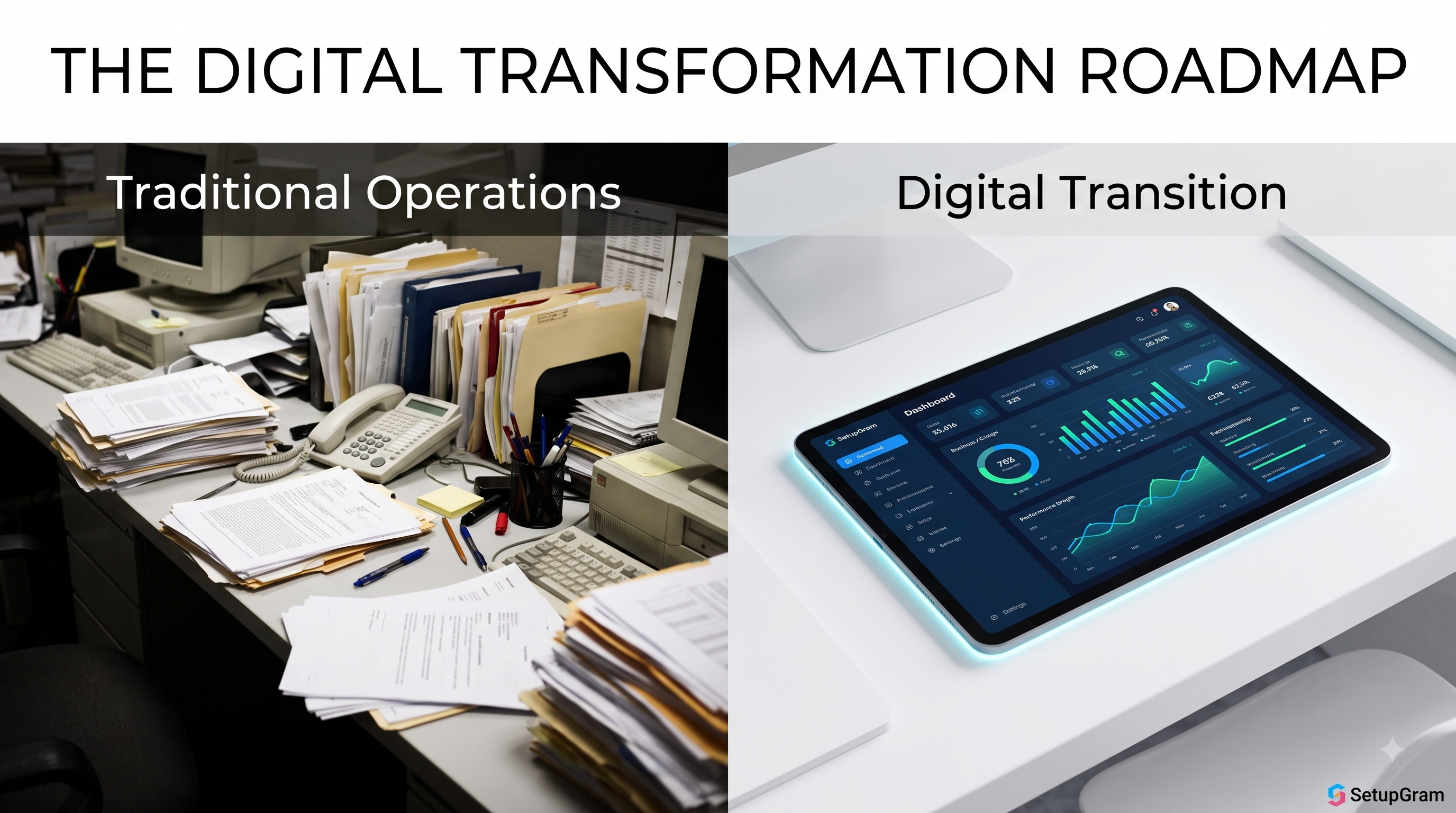
The Urgent Need for Digital Transformation
In a rapidly evolving economy, continuing to rely on manual workflows and disconnected legacy systems is a massive operational risk. According to industry data, 89 percent of all companies have already adopted a digital-first business strategy or are planning to do so. Furthermore, global spending on digital transformation is projected to reach anywhere from $3.4 trillion in 2026 to nearly $4 trillion by 2027.
Yet, transitioning a traditional business into a modern digital enterprise is incredibly complex. Studies show that 70 percent of digital transformations fail, usually due to a lack of proper planning, poor change management, and a disconnect between technology and core business goals. This is exactly why your organization needs a structured Digital Transformation Roadmap.
What is a Digital Transformation Roadmap?
A digital transformation roadmap is a step-by-step strategic plan that guides a business from its current, traditional operations to a more efficient, scalable, and connected digital ecosystem. Rather than implementing random software, a roadmap aligns your technology investments directly with measurable business outcomes.
The 4-Phase Roadmap for Traditional Businesses
Modernizing your operations does not happen overnight. A strong roadmap typically moves through four critical phases:
Phase 1: Assessment and Planning
- Audit Current Processes: Identify manual tasks, paper-based workflows, and legacy systems that slow down operations.
- Define Business Goals: Set clear, measurable objectives—such as reducing customer support costs or speeding up the sales cycle.
- Secure Buy-In: Transformation requires cultural adoption; ensure your team understands why the change is necessary.
Phase 2: Digitizing Core Foundations
- Cloud Infrastructure: Migrate localized data to secure cloud platforms to enable remote work and real-time collaboration.
- Automate Repetitive Workflows: Digitize critical documents and automate basic internal approval flows to free up human capital.
Phase 3: Integration and Customer Experience
- Unified Platforms: Implement custom CRM solutions to centralize customer data and streamline communication.
- Omnichannel Delivery: Redesign your website or build a Progressive Web App (PWA) to ensure a seamless experience across desktop and mobile platforms.
Phase 4: Advanced AI and Automation
- Intelligent Chatbots: Integrate AI to handle tier-1 customer support and lead qualification, drastically reducing operational overhead.
- Data-Driven Decisions: Use advanced analytics to monitor performance and predict market trends, ensuring continuous operational improvement.
Why Partner with SetupGram?
Successfully moving a traditional business online requires more than just buying off-the-shelf software; it requires a strategic partner. SetupGram provides end-to-end digital consulting and app development services tailored to your specific operational needs.
Our team ensures that your digital transformation bridges the gap between technology and people. We focus on scalable cloud architectures, AI automation, and robust custom CRM systems that drive real ROI and prevent your business from becoming part of the 70 percent failure statistic.
Ready to modernize your operations?
Stop relying on outdated workflows. Let SetupGram build your custom digital transformation roadmap today.